IPv4 market trends
What an IPv4 address costs, and which way the price is going.
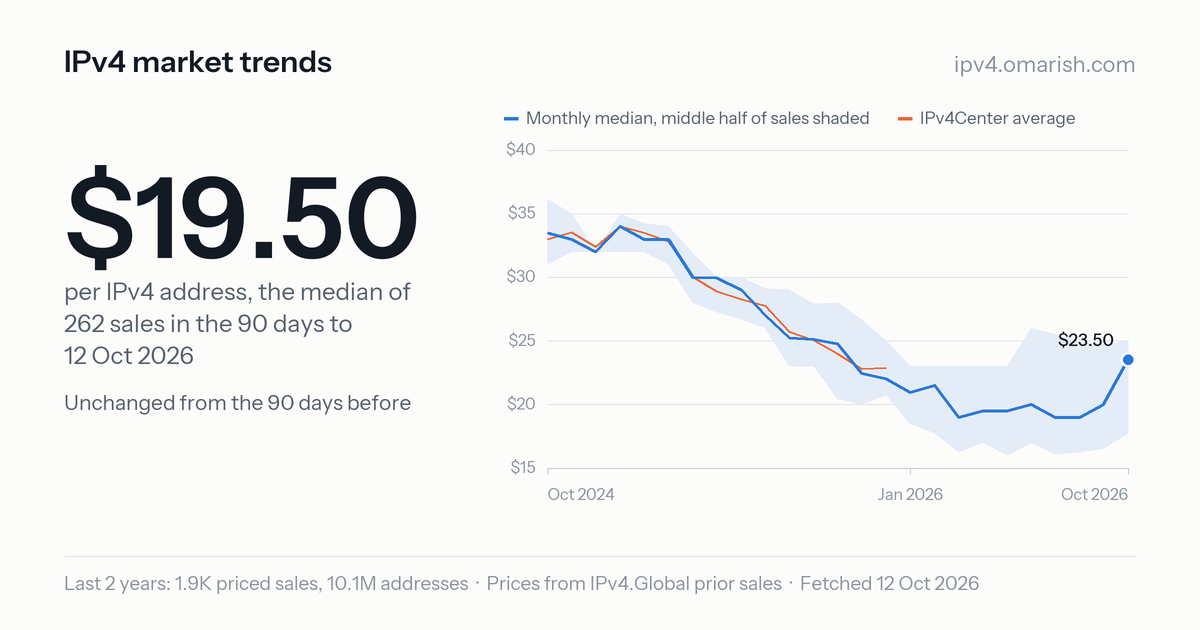
There are only about 3.7 billion usable IPv4 addresses and the registries handed out the last fresh ones years ago, so the way you get a block today is to buy it from someone who already has one. That makes address space one of the stranger commodities around. A /24 is 256 addresses you can announce to the internet, and it sells at a price per address that drifted from about $33 in late 2024 to around $20 through 2026. Nobody publishes a ticker for this, so I built one.
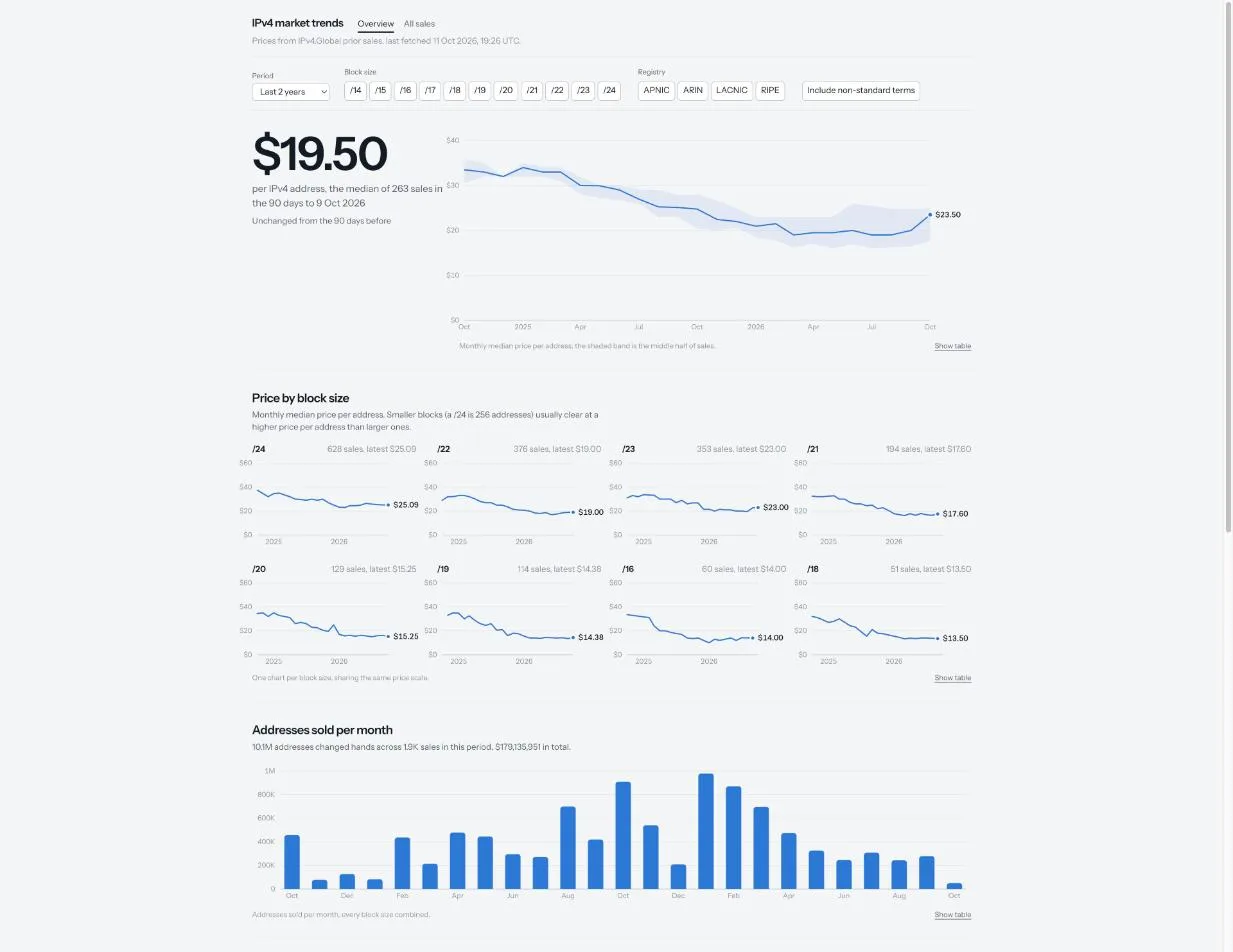
ipv4.omarish.com pulls every completed sale from IPv4.Global's public prior-sales feed, about six thousand of them going back to 2014, keeps them in Postgres, and draws the monthly median with the middle half of sales shaded around it. You can narrow it by period, block size, and registry, and every number on the page follows the filter. The thing that surprised me most is that smaller blocks sell for more per address than larger ones. A /24 goes for about $25 an address while a /16 goes for $14, which is the opposite of every other bulk price I know, and probably says something about how many buyers can write a check for 65,536 addresses at once.
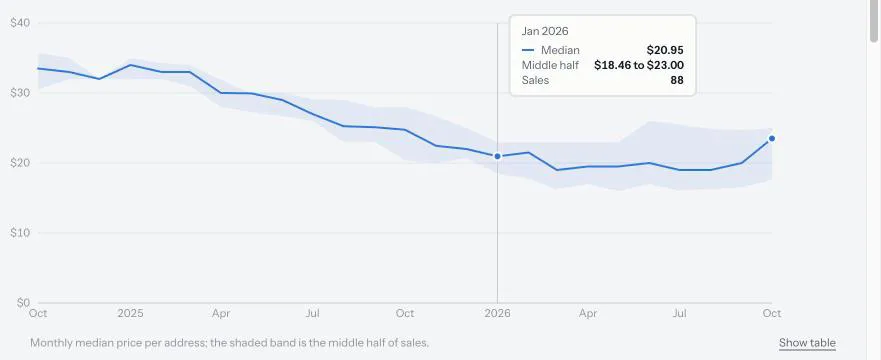
Hover anywhere on a chart for the month's median, the quartile range, and the number of sales behind it. Every chart has a plain table behind a toggle, and the full list of sales is sortable and downloadable as CSV.
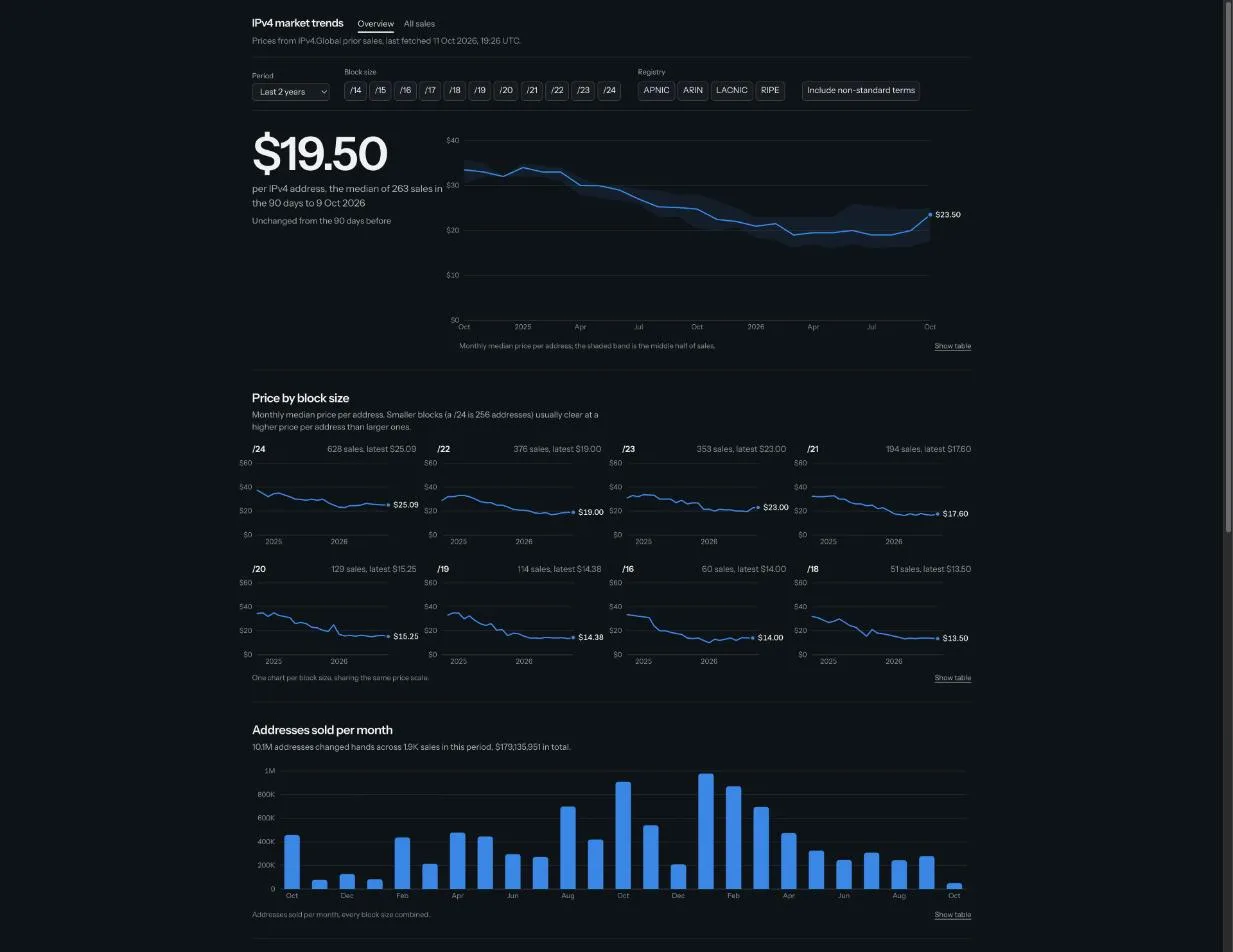
Under the hood it is a small Django app with the charts drawn as SVG by hand, running on Amethyst against the shared Postgres cluster there. A job refreshes the sales every six hours. The data is not large and the queries are plain SQL, which is my favorite kind of project: one table, a few percentiles, and a page that answers one question in the first three seconds.